

A Contemporary Ceramic Restoration & Kintsugi Workshop
Discover a thoughtful approach to repairing and reimagining broken ceramics.
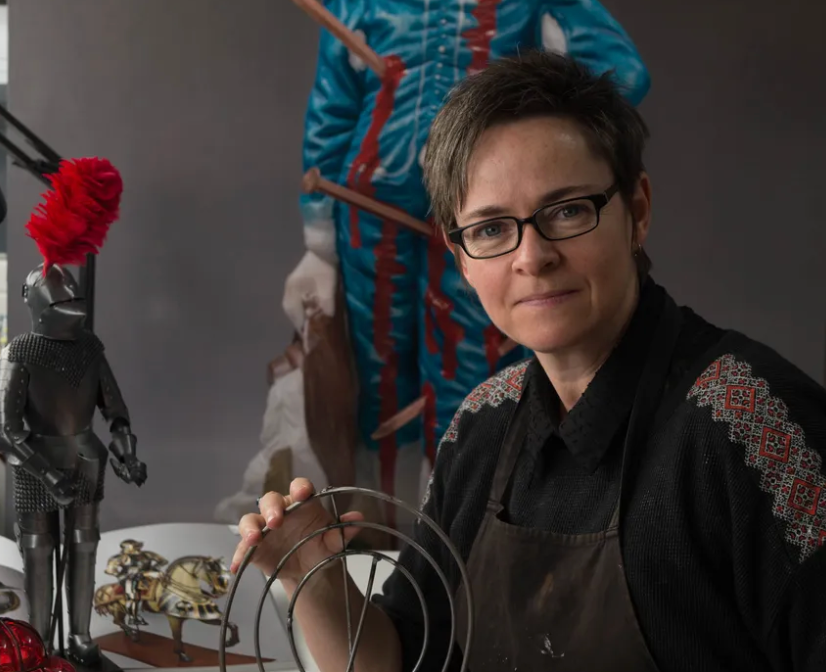
Spend this spring exploring the art of thoughtful ceramic restoration with award-winning artist and senior ceramics conservator Penny Byrne.
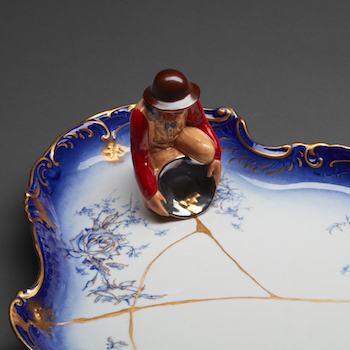
In this four-week workshop, you’ll explore restoration of ceramic objects and Penny’s conservation-informed contemporary approach to kintsugi. Through practical exercises using test pieces, you’ll learn key principles, materials and techniques used by professional conservators.
You’ll gain an understanding of the complexities involved in ceramic restoration, providing a strong foundation for continuing to develop the skills introduced in the workshop.
At Slow Clay, we believe restoring broken ceramics honors both the object and its raw materials. Rather than discarding broken ceramics, restoration offers us an opportunity to honour an object’s history, extend its life and uncover new value in what might otherwise be overlooked.
Drawing on more than 30 years of experience in ceramics conservation and restoration, Penny’s teaching goes beyond decorative repairs. Rather than focusing on a single repair method, you’ll learn how conservators assess different types of damage, select appropriate materials and make informed treatment decisions. Alongside contemporary restoration techniques, you’ll explore Penny’s distinctive approach to kintsugi, using carefully selected modern materials to create strong, lasting and aesthetically refined repairs.
Whether you’re a ceramic artist, maker, collector or simply curious about the art of repair, this workshop offers a rare opportunity to learn from one of Australia’s leading ceramics conservators.
4 weekly sessions
Tuesdays 10 November – 1 December 2026, 6.00 – 8.30 pm
$395 Earlybird/Concession ($425 Normal) 50% deposit to book, balance due 3 weeks before start date.
There will be a materials cost surcharge of $30 (depending on materials used) payable to Penny in the first class.
See Penny’s work here
*Kintsugi (金継ぎ, きんつぎ, “golden joinery”), also known as Kintsukuroi (金繕い, きんつくろい, “golden repair”), is the Japanese art of repairing broken pottery with lacquer dusted or mixed with powdered gold, silver, or platinum, a method similar to the maki-e technique. As a philosophy, it treats breakage and repair as part of the history of an object, rather than something to disguise. (Wikipedia)
Please note: This workshop explores Penny’s contemporary, conservation-informed approach to kintsugi. Rather than traditional Japanese urushi lacquer techniques or real gold finishes, participants will learn modern repair methods designed to create strong, lasting and visually considered ceramic restorations.