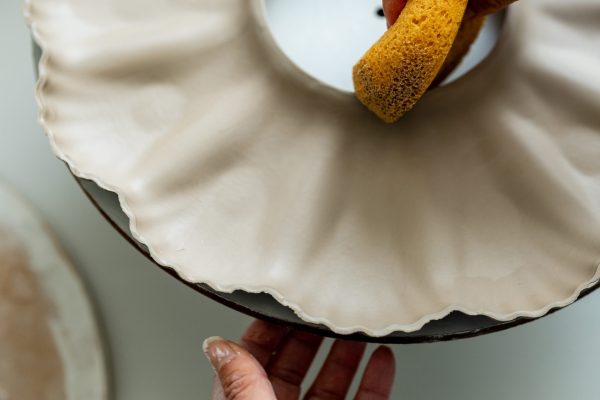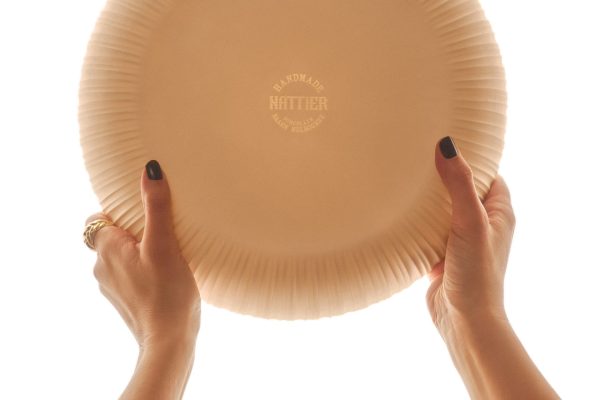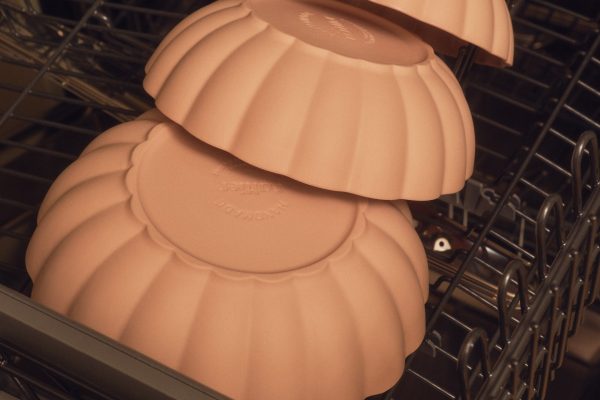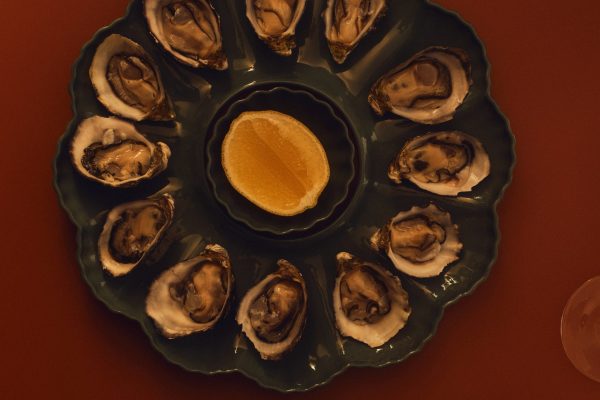
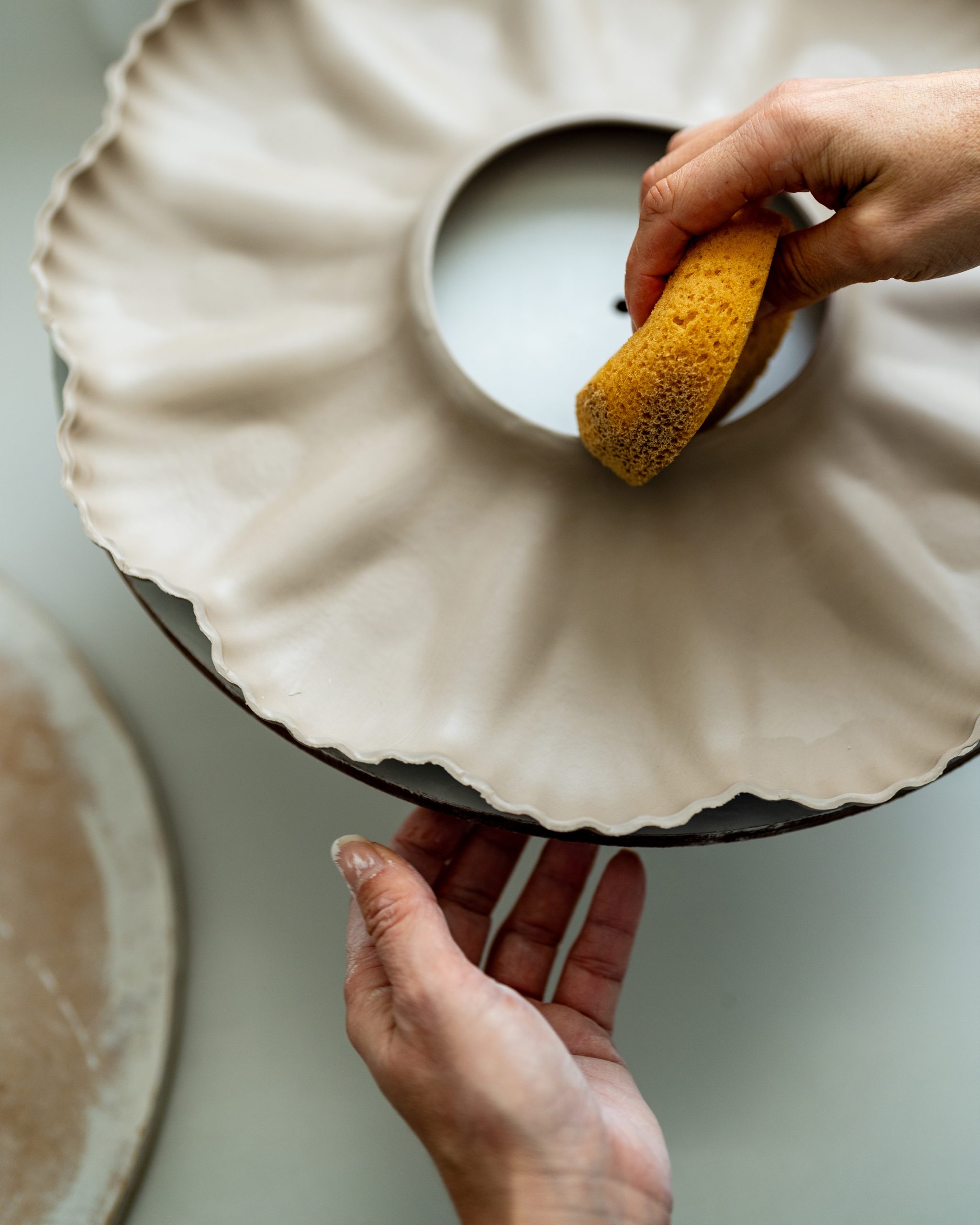
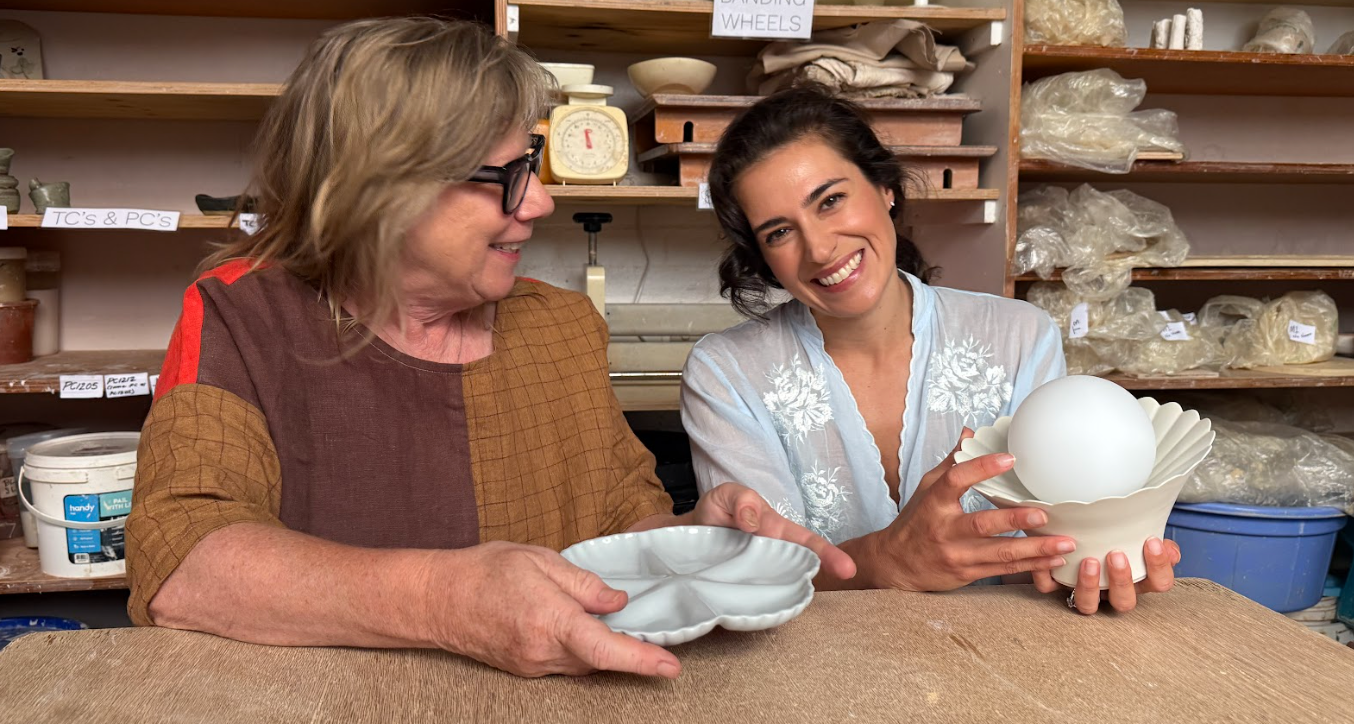
In this interview Slow Clay Centre director, Jane Sawyer, chatted with Natalie Rich from Nattier Ceramics. Nat was a student at SCC for a number of years and came from working professionally as a designer so it is no surprise to reveal her work is meticulously made (using the slip-casting method) and finished and her beautiful designs are satisfyingly resolved and have a special presence on the table, to use lovingly and reverently. Grab a cuppa and have a read to be inspired by Nat’s story!
Jane: Hi Nat! I’d love to start before Nattier existed. When did clay first begin to feel like more than just something you were trying and was there a moment where you realised you were no longer “dabbling”? What was your life like then, outside the studio?
Nat: Life was in a major transition. I had become a mother and after a prolonged mat leave left my full time design job so I was the most lost I’d ever been in my life. There was a gaping hole to fill. My first clay course was at a community centre and, being a product designer the very first thing I did was make a functional object. I had a desire to share what I had made but it took some time to work out what that would look like.
Jane: You spent many years learning and testing before launching your own studio. What do you remember most about being a student? Did you have a sense of where your work might end up, or were you just following curiosity?
Nat: I loved being a student (however I did feel a bit like I was on borrowed time from the family and pursuing this path had a lot of challenges). Generally I felt like clay people were the most kind and supportive people I’d encountered. I think a commercial design environment is overly critical, it has to be. Being a student was the opposite. Peers and teachers were supportive and encouraging which did wonders for my confidence and I felt the most free to express myself. I loved the advice from you, Jane, to analyse my work and examine the elements I like and the ones I don’t and use that reflection to create the next iteration. I still use that thought process when things don’t turn out as expected.
Jane: So many of our students are right in the thick of learning, testing and doubting. What would you say to them now? What do you wish you’d known when you were in that phase?
Nat: Enjoy it! Making is so much fun. Having a nurturing studio with freshly pugged clay, glazes, slips and firing on hand is an absolute treat. Let your creativity run free, make friends, have coffee, stay late, enjoy drinking tea from one of Jane’s cups, use SATS, make gifts for your loved ones and pick the brains of your teachers. Having mentors is invaluable. In fact Slow Clay connected me with events, makers and community – and I was lucky enough to attend workshops from Prue Venebles, Pie Bolton, Greg Daly and Somchai Charoen.
Jane: You are the perfect example of a persistent, self-motivated student! There’s often a long stretch between “starting out” and “finding your voice.” What was that middle period like for you? What kept you showing up to the studio?
Nat: The middle period was not pretty. It was frustrating. I had so much design work I wanted to produce and yet it would fail in every which way. I kept going back because every error uncovered a bit of knowledge which gave me hope for the next piece. The tiny bit of hope that I could solve the problem and kept me going back. In a general sense, hope and anticipation are great driving forces. I don’t know if the ‘best’ or ‘perfect’ work is ever attainable. I enjoy attempting to get there though – that makes me excited. I enjoy setting problems like how to negotiate the relationship between geometric accuracy and hand-guided.
Jane: Your work involves a lot of drawing, modelling and refining. How do you use making as a way of thinking? What role do testing and mistakes play in your process? Do you ever make things just to learn, with no intention of keeping them?
Nat: Yes 100% to making things for fun. Though I tend to have a concept in my head first rather than the other way around. There’s messy scribbles, nice sketches, crappy paper 3D cutouts, 3D computer models, models handbuilt in clay and paperclay. Any means necessary really. And it’s the most enjoyable part. It’s not for show so it is really just a way of working things out for myself depending on the type of product. The nature of slipcasting means that by the time you’re ready to make a mould you want to be fairly certain about the piece i.e the play happens before the mould is made.
Jane: Many of our students are thinking about how to make thoughtfully and responsibly as they develop their practice. What has ‘continual learning’ around environmental responsibility meant for you as a working ceramicist?
Nat: I think it’s about being able to adapt to better practices as they become available and continually examining your own practice. Could you do things better? The Nattier operation treads very lightly however there are things I know can be better but I don’t know how to change them and when the better option is available I’ll always take it. For example the availability of paper based packaging over plastic.
B Corp guidelines are a useful benchmark. I take it very seriously and I’m not going to give myself a pat on the back for something that should be done anyway.
Jane: Nattier launched in 2023, coming into your third year – what has surprised you most about sharing your work with the world?
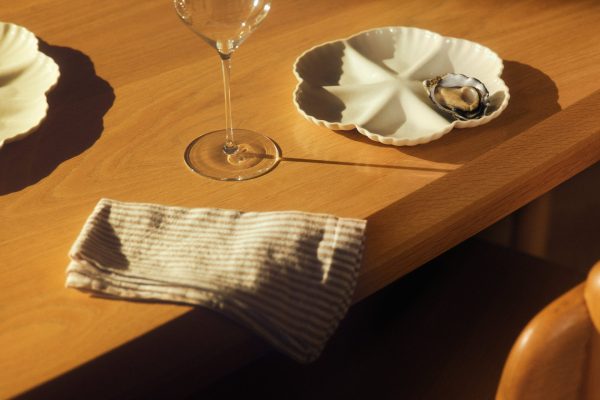
Nat: I love seeing people enjoy the work and how they use it in their lives. And I love receiving photos of peoples celebrations and home dinners. To be a part of that in a tiny way is really special.
Jane: What feels alive and exciting in your practice in 2026?
Nat: Experimentation! I’m excited to get a little messier. I have an overly prescribed and precise way of working and I feel ready to, in a controlled way (lol) let some of that go.
Jane: Thanks for your time Nat and for sharing your story with us. We are so proud and excited to see Nattier Ceramics developing from strength to strength. You can find Nattier Ceramics at Jardan in Melbourne and Leila in Sydney. On Instagram @nattierceramics and the web: nattierceramics.com