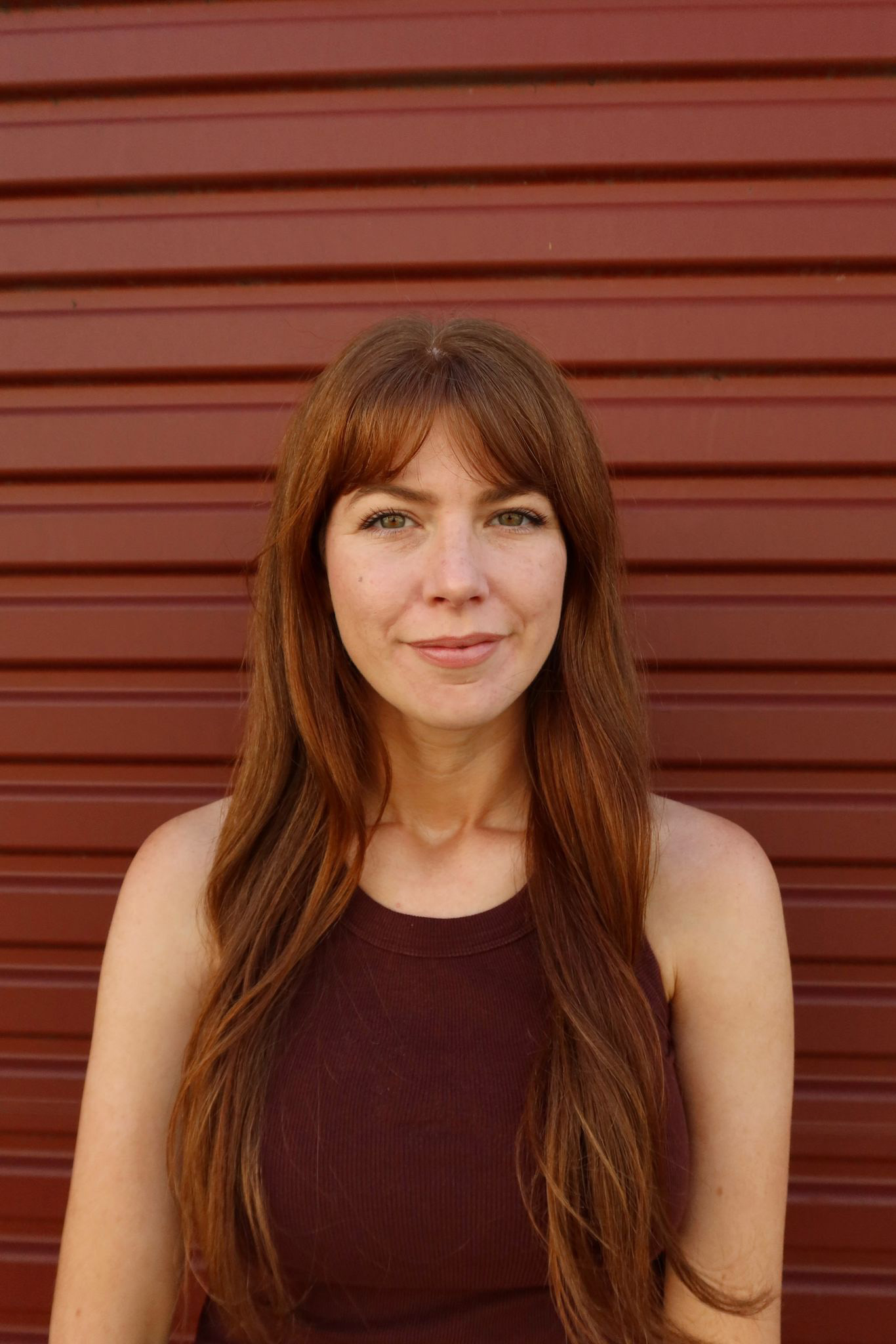
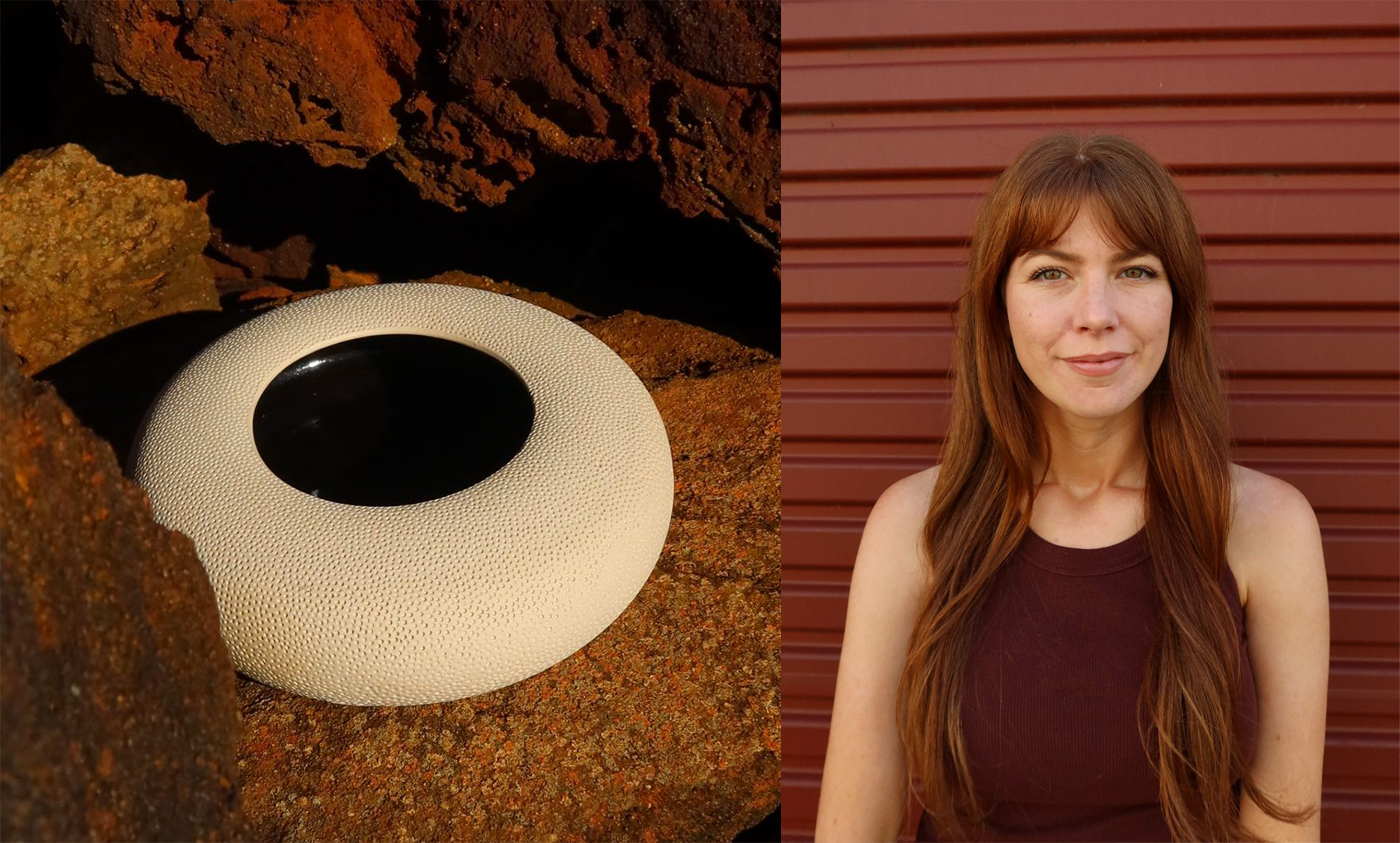
Grab a cuppa and read our spotlight on Alyssa Nuttall!
Alyssa, congratulations on a wonderful month being featured in so many exhibitions in Melbourne Design Week! It’s so great to see your work being recognised. I know there’s been many years of hard work that has gone into your development because I remember when you started at Slow Clay Centre as a student. For anyone who is still a student, can you talk to us about that developmental pathway and how you have navigated it?
Thank you. It’s been a really meaningful month, but it certainly doesn’t feel like something that happened overnight.
I’m so grateful to have started my journey with clay at Slow Clay Centre. I’d just completed a degree in psychology and music and was planning to pursue a Masters in Music Therapy. I was looking for something hands-on to do alongside study and happened to enrol in a pottery class. That decision ended up changing the trajectory of my future, and I’ve never really left.
One of the things that’s quite unique about Slow Clay is that there’s a developmental pathway beyond being a student. After taking classes, I completed the technician internship, which involved learning all the behind-the-scenes studio work – pugging clay, mixing glazes, kiln loading, studio systems, OH&S, and all the practical things that keep a ceramics studio running.
From there, I shadowed other teachers, began assisting in classes, and eventually completed teacher training with Jane Sawyer to teach the Slow Clay Method. Throughout that process, Jane consistently encouraged me not just to develop technical skills, but to think critically about materials, process, and what I wanted to contribute through my own work. Throughout that time I was still working full-time elsewhere, but gradually I realised that ceramics was becoming more than a hobby. I slowly reduced my other work as my teaching commitments and studio practice grew, and now divide my time between teaching and my own practice.
Something I often say to students is that learning ceramics is a lot like learning a new language. We see the beautiful finished pieces and effortless-looking videos online, but there’s a huge amount of practice behind that. Technical skill develops over time, and so does a considered practice.
One of the most valuable things I learned along the way is that technical skill and artistic development happen alongside one another. Learning the craft gives you the tools, but developing a considered practice takes much longer. I still feel very much in that process, and I suspect I always will.
Your forms seem to have a few different aspects to them from rounded wheel thrown and altered to detailed sculptural pieces that are hand carved. Do you find the processes you use dictate the forms as you are making them or do you start with a clear idea?
It really depends on the work.
Sometimes I begin with a very clear idea of the form I’m trying to create, particularly for larger sculptural or furniture pieces where structure, scale and function need to be considered from the outset.
Other times, I start with a broader concept or question and allow the form to develop more intuitively through the making process.
My approach has been heavily influenced by Jane Sawyer’s Touch & Respond philosophy, as well as her Collapse Series. Both encouraged me to see clay not as something to completely control, but as a material with its own behaviours and possibilities.
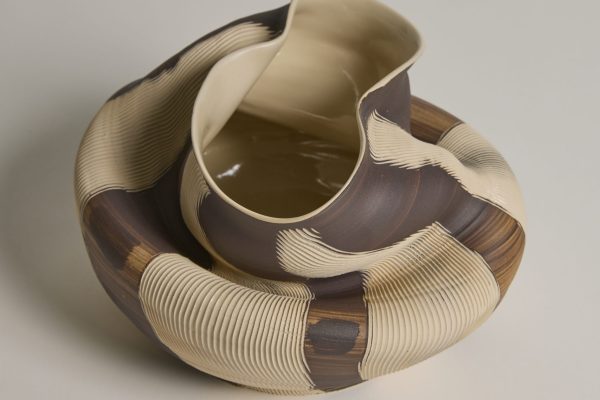
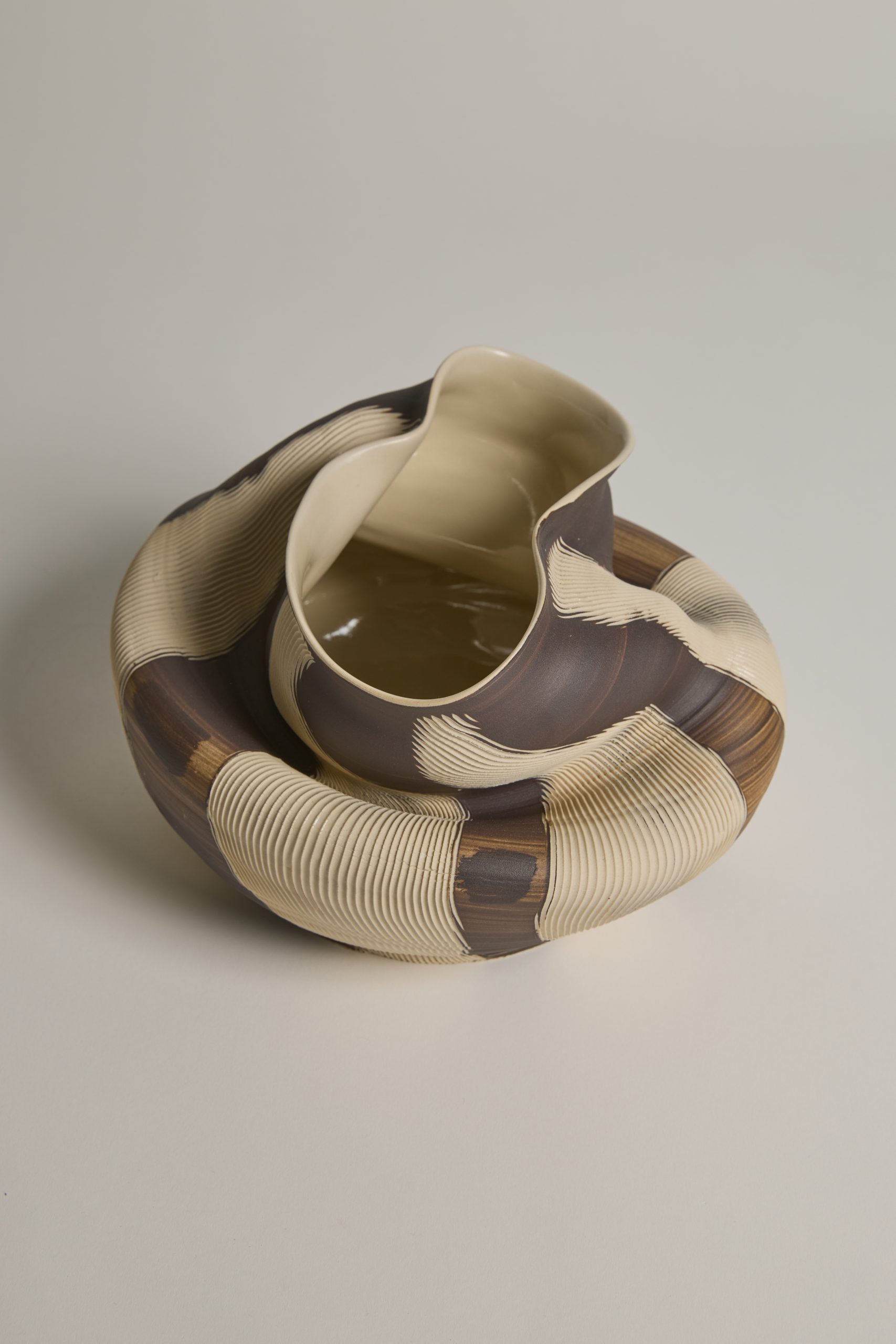
Even when I start with a clear vision, the work almost always changes along the way. Clay has its own limits, weight, memory and timing, and some of the most significant developments in my practice have come from responding to unexpected moments rather than resisting them. In fact, the coral-like forms that have become central to my work emerged from a moment of frustration and what I initially considered a mistake.
So, I usually begin with an intention, but I try not to become too attached to a particular outcome. The final form often emerges somewhere between the original idea and what the material itself has to offer.
Can you tell us a little about the materials and processes you use? And firstly, why clay?
Clay is the ultimate responsive material. It’s incredibly sensitive to touch, pressure, timing and environment, which means every piece becomes a negotiation between what you want the material to do and what it’s actually willing to do. That’s something I’ve never stopped finding interesting.
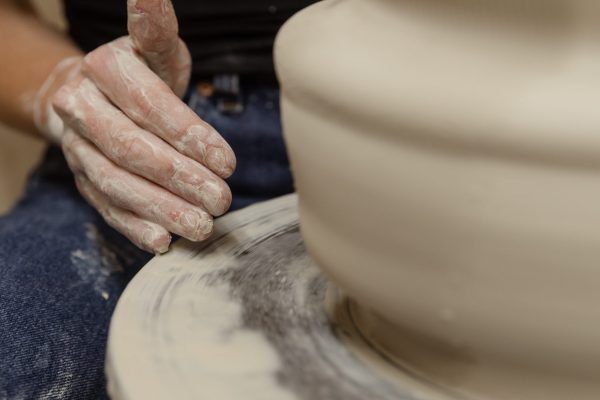
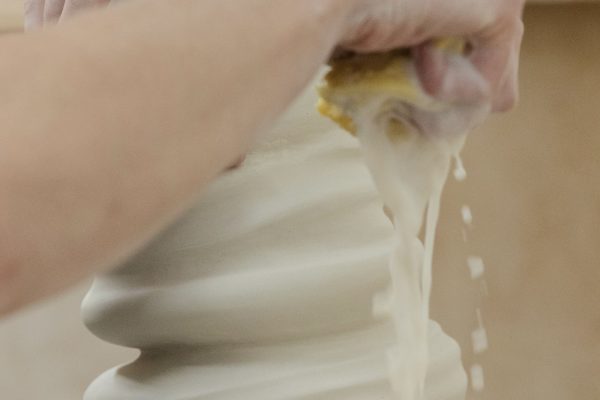
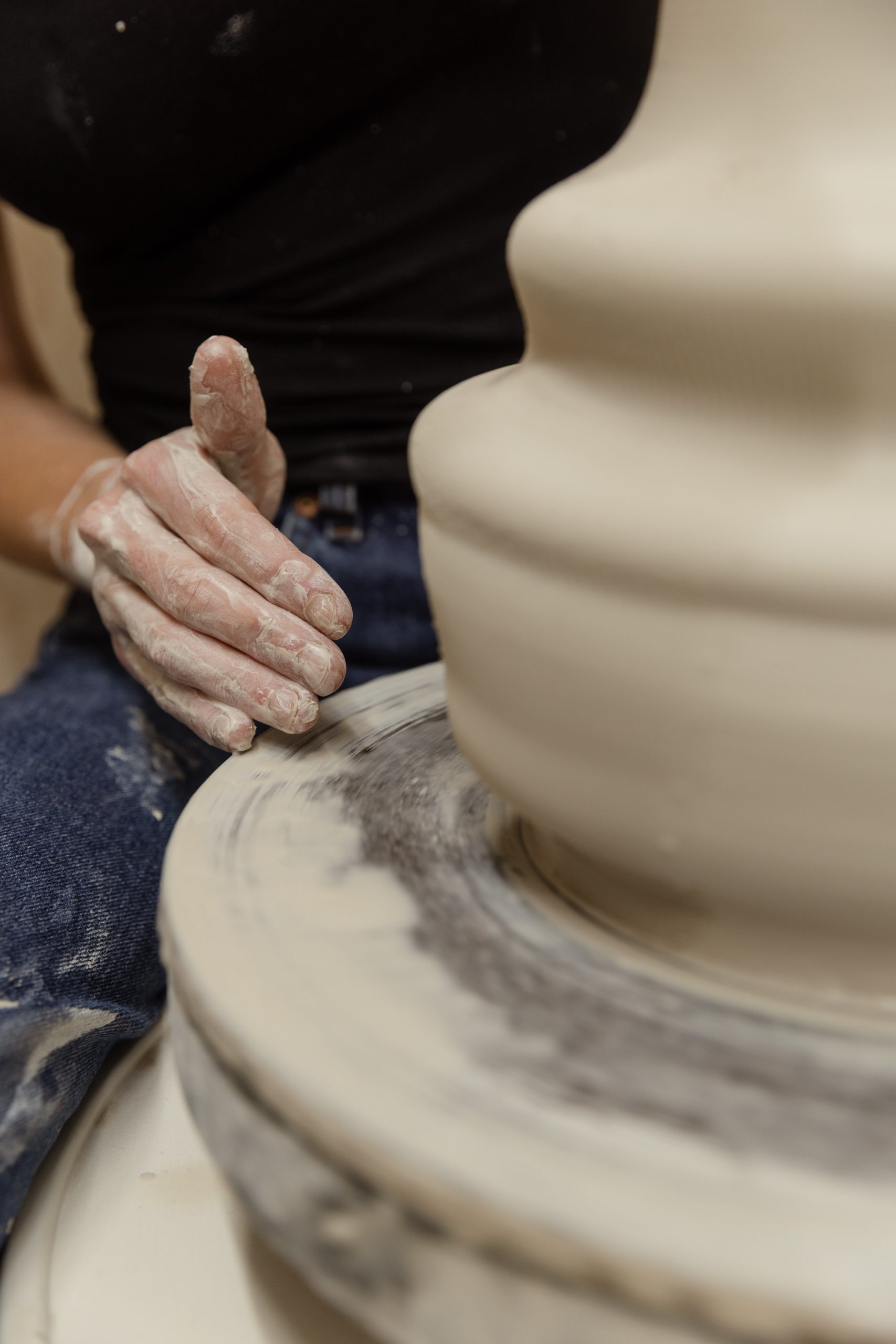
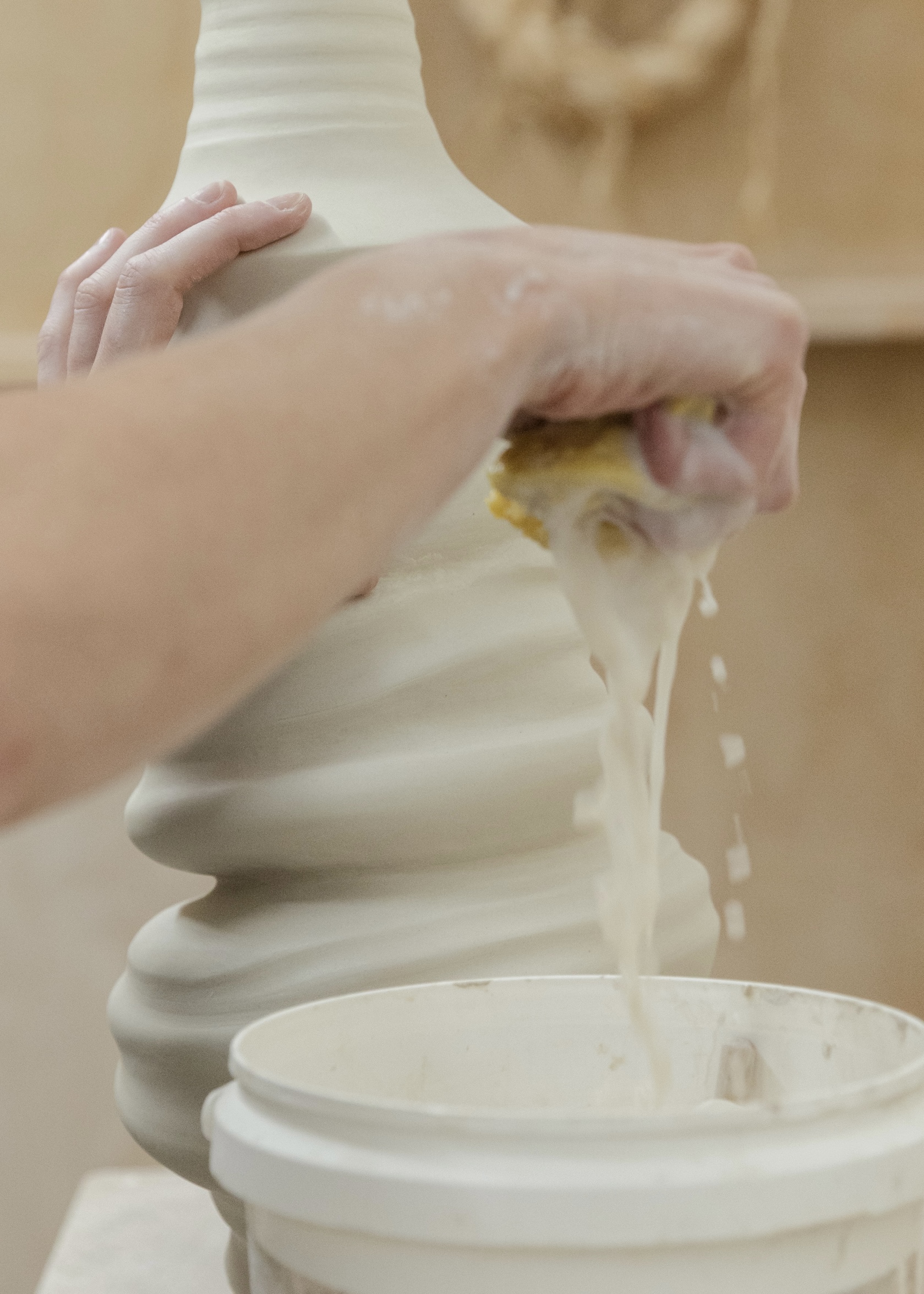
Most of my work begins on the wheel before being altered, carved, reconstructed or assembled. I often combine wheel-thrown and hand-built processes, allowing forms to evolve through multiple stages of making. Surface is also an important part of the work, with carving and texturing used to reference processes of erosion, growth, pressure and environmental change.
Beyond technique, one of the most important things I learned through Slow Clay was that materials don’t exist in isolation. Jane encouraged us to think about where materials come from, the environmental impact of our decisions, and our responsibilities as makers. Those conversations shaped the way I approach my practice and continue to inform how I think about clay, place and process today.
What keeps me returning to clay is that it never feels entirely predictable. Even after years of working with it, there is still an element of discovery. The material continues to surprise me, and I think that ongoing conversation is what sustains my practice.
We love having you as a teacher at Slow Clay Centre and your classes always seem so much fun! How do you find the balance between teaching and making?
I love teaching. It gives me a lot of energy. There’s something really refreshing about working with beginners and seeing people surprise themselves with what they’re capable of. Watching students build confidence and develop new skills is incredibly rewarding.
In terms of balance, I tend to work in sprints, or seasons, depending on what I have coming up. Before Melbourne Design Week, for example, I was preparing work for four exhibitions, so most of my time outside teaching was spent in the studio. During those periods, making becomes very focused and intensive. (RIP my social life!)
What I’m still learning is the importance of the quieter periods in between. After a big push like that, I need time to recover, reflect and plan what’s next. Historically I’ve not been very good at downtime, but I’m starting to understand that rest is part of the process too. It creates the energy and clarity needed to return to the studio with fresh eyes.
Teaching actually helps with that balance. It gets me out of my own head, keeps me connected to a creative community, and reminds me that making should be playful as well as considered.
What’s next for you?
I’m currently making work for Craft Victoria, and I have pieces heading to the TACA Members’ Exhibition in Noosa in July, along with another group exhibition in the works with some wonderful colleagues.
I’ve also started planning my first solo exhibition, which is both exciting and a little daunting. It’s giving me an opportunity to think more deeply about the ideas that have been developing through recent bodies of work and how they might come together in a larger conversation.
Beyond that, I’m about to move studios into a shared metalworking space, which I’m really excited about. I’ve become increasingly interested in how metal might intersect with my ceramic practice, both structurally and conceptually, and I’m looking forward to learning from makers working across different disciplines. I’m also keen to explore how these materials might open up new possibilities for larger-scale and installation-based work.
See more of Alyssa’s work here: Website and Instagram
It’s inspiring to hear about your pathway! Thanks and huge congrats again Alyssa!
Jane Sawyer, June 2026